
Fun Facts About the Weather Unit Study


Learning about the weather can be fun! I have found that breaking things down sometimes into smaller unit studies can really help a child to understand a particular subject. I am excited so share this weather unit study with you!
If you are in a hurry and want to come back to this post later, you can go ahead pick up the unit study pack —>>>HERE
Fun Facts About Weather Unit Study
1. Clouds are made up of water droplets.
Every cloud in the sky is made up of tiny water droplets. When the sun heats up the water in puddles, lakes, streams, rivers, and the ocean, it evaporates and rises in the air.
The cooler air temperature turns the vapor back into tiny water droplets. When the water droplets gather together, they form clouds. Clouds seem to float because the droplets are so spread out and so small that gravity has little effect on them.
2. There are three main types of clouds.
Although there are different variations, the three main types of clouds are stratus, cumulus, and cirrus. Low-level clouds are called stratus clouds.
Thunderstorm clouds are called cumulonimbus clouds, and cirrus clouds are the wispy clouds you see high in the sky. If a cloud is very close to the ground, we call it fog.
3. The sun is a star.
Burning brightly and at about 5,500 degrees Celsius, our spherical sun is comprised of hydrogen and helium gases. The sun has a mass of 1,989,100,000,000,000,000,000 billion kg and is so big that about one million Earth’s could easily fit inside of it. It takes the Earth 365 days to orbit the sun!
Join our exclusive homeschool group —>>>HERE.
4. Rain is part of the water cycle.
Have you ever wondered why it rains? Rain is a form of precipitation that’s very important to the water cycle. It occurs when clouds become too heavy with water droplets and release them in the form of rain, sleet, snow, or hail.
Each water droplet is only about 10-15 microns wide, so it takes a lot of them to cause a rain shower. Puu Kukui on the island of Maui holds the record for the most rainfall in one month – 101 inches! Rainforests also receive quite a bit of rain each year, while Antarctica is the driest continent on Earth.
5. Extreme tornadoes can have wind speeds over 300 miles per hour.
The average tornado has wind speeds less than 100 miles per hour, but extreme tornadoes spin much faster. Measured using the Fujita Scale, tornadoes form in the shape of a funnel.
They form from thunderclouds and are considered tornadoes when they make contact with both the cloud above and the ground below. If you live in an area prone to tornadoes, listen for tornado watches (when the chances of a funnel cloud forming are great) and tornado warnings (when a tornado has been spotted).
Get to an interior room, basement or storm cellar and stay away from windows. There are about 1,000 tornadoes in the United States each year.
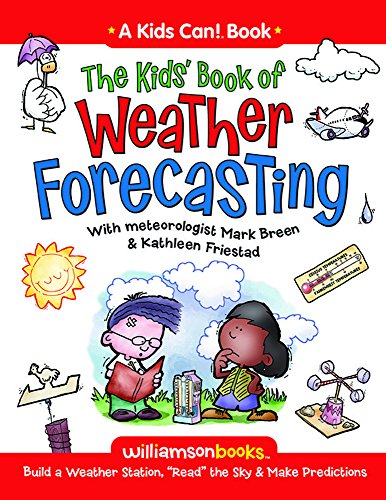
Recommended books and learning resources on weather:




I also have a Weather Unit Study Available in my store! You won’t want to miss this cute printable pack! Learn about the sun, tornados, clouds, and rain! Click —>>>HERE to check it out in my store or just click the picture below.

In Awe,
Laura


