

Pressure Cooker Collard Greens


What exactly are collard greens?
A super popular leafy vegetable that is served with a lot of Southern dishes. The texture is a bit like kale but the stems are super hard and should be removed before cooking.
Can you overcook collard greens?
Possibly, but it’s really hard to do. Collard greens seem to be very forgiving when they’re cooked, so you seem pretty safe no matter how long you decide to cook them for. I grew up with my mom keeping a mess of greens cooking on the stove and they were always amazing!

Where did Collard Greens get their name?
Believe it or not, collard greens are actually a cabbage. Their name stems from the word “colewort” which can be translated as “wild cabbage plant.”
Are collards hard to digest?
They can be more difficult to digest because of their structure. Just keep in mind that if you eat enough, you might start to feel bloated. It will pass, but it’s good to be aware of nonetheless.
Can you eat collard green stems?
Yes, but you will need to cook them down quite a bit to make them soft. You’ll often find that people leave the stems attached when adding them to recipes to save on time.
What are the benefits of eating collard greens?
Besides the fact that you’re getting a healthy dose of vegetables, there are some other great benefits of eating collard greens. They contain soluble and insoluble dietary fibers to help control LDL cholesterol levels. They are a good source of Vitamins A and C. Collard greens also offer protection against hemorrhoids, constipation and also colon cancer diseases.
Eating collard greens when you’re on a diet is a great way to consume fewer calories to get to your goal weight.

Can you freeze collard greens?
Unlike lettuce or other green leafy vegetables, you can actually freeze collard greens. Just make certain to clean them and drain the water from them before adding them to a freezer-proof bag.
The key to making certain that your collard greens freeze well is to get out as much of the air in the bag as possible. If you have a vacuum sealer for food, this would be ideal.
Can you eat uncooked collard greens?
While I know that this recipe is all about cooking them, collard greens can also be eaten raw. Chopping them up finely and adding them to your salad is a great way to get in an extra dose of fiber!
How long will collards keep in the fridge?
As long as you’re keeping your collard greens in the crisper part of your fridge, they should stay fresh and ready for about 5 days or so. After that, they’re going to wilt and not be good.
Can you eat collard greens that have turned yellow?
If the leaves on your collard greens have started to change color from green to yellow, it’s in your best interest to toss it out or add it to your compost. The yellow color is going to give the collard greens an even more bitter taste than normal.
Keep this in mind before purchasing them from your local grocer. The last thing you want to do is waste hard-earned money on food that is no longer good to eat.
Who knew that I was such a database of knowledge about collard greens, right? Now that I’ve filled you full of information, it’s time to get on with this simple Pressure Cooker Collard Greens recipe!
| Image | Title | Price | Prime | Buy |
|---|
Pressure Cooker Collard Greens
Serves – 4
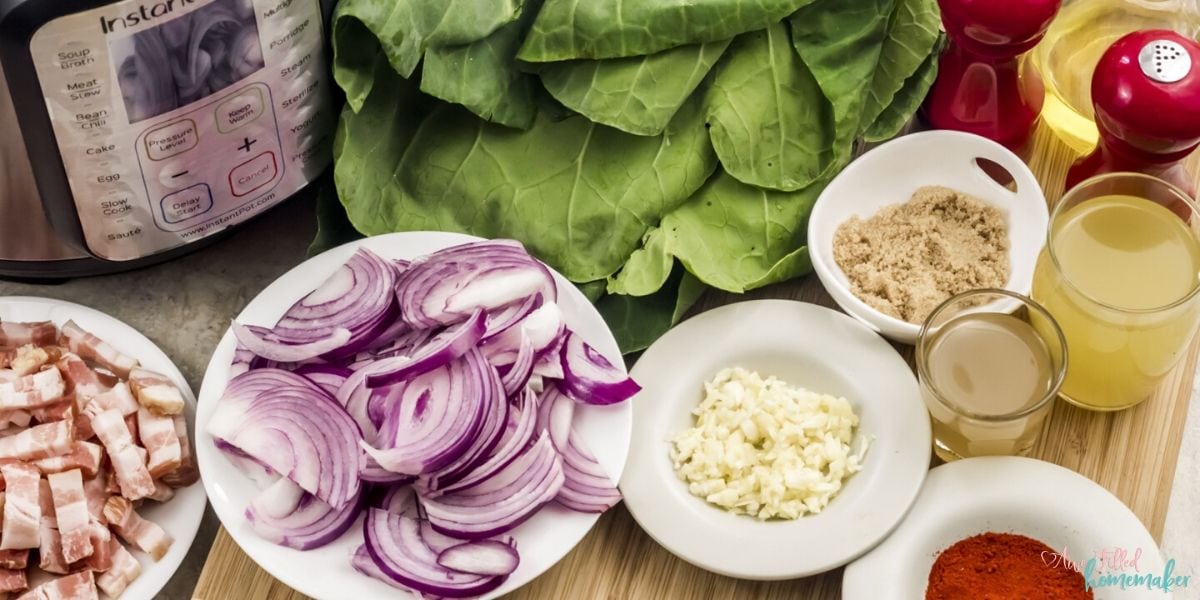

Ingredients to make this low carb recipe
-
2 bunches of Collard Greens, roughly chopped (about 8 cups)
-
6 thick strips of bacon, chopped
-
1 large Onion, sliced
-
5 fat cloves of Garlic, minced
-
1 tablespoon of Brown Sugar
-
2 teaspoon of Smoked Paprika
-
2 tablespoon of Apple Cider Vinegar
-
½ cup of Chicken Stock
-
1 tablespoon of Olive Oil
-
Salt and Pepper
Instructions to cook collard greens

Saute the bacon until crispy in the Instant Pot. Add onions and garlic & saute another few minutes.

Add brown sugar, paprika, salt and pepper, and mix.

Add the vinegar and chicken stock.

Add collard greens. Pressure cook for 25 minutes. NPR for 10 minutes.

Mix and serve!

Notes
-
You can substitute brown sugar for Truvia Blend Brown Sugar or your favorite brown sugar substitute.
What do you serve with collard greens?

Pressure Cooker Collard Greens
Ingredients
- 2 bunches of Collard Greens, roughly chopped, (about 8 cups)
- 6 thick strips of Bacon, chopped
- 1 large Onion, sliced
- 5 fat cloves of Garlic, minced
- 1 tablespoon of Brown Sugar
- 2 teaspoon of Smoke Paprika
- 2 tablespoon of Apple Cider Vinegar
- ½ cup of Chicken Stock
- 1 tablespoon of Olive Oil
- Salt and Pepper
Instructions
- Turn the Instant pot to the ‘Sauté’ mode and wait till the display reads ‘HOT’. Add the chopped bacon. Sauté for 5 minutes, stirring constantly till the bacon is brown and crispy.
- Add the sliced onions and garlic and sauté for another 3 to 5 minutes till the onions have softened and turned brown.
- Add the brown sugar, smoked paprika, salt, and pepper and mix well.
- Add the apple cider vinegar and chicken stock to deglaze the pot. Scrape down the bottom to remove all the browned bits.
- Now add the chopped collard greens.
- Turn off the “Sauté” mode. Put the lid on, making sure that the pressure valve is in the “Sealing” position.
- Select the “Pressure Cook” mode and adjust the time, with the “- / +” to 25 minutes.
- When Instant Pot beeps, let the pressure release the natural way for 10 minutes and then using the spoon that came with the instant pot, turn the pressure valve to the “Venting” position to do the quick release.
- Give everything a mix. The greens should be very tender. If there is too much liquid, turn the instant pot back on the ‘Sauté’ mode and let the excess liquid evaporate.
- Serve warm.
Notes
You can substitute brown sugar for Truvia Blend Brown Sugar or your favorite brown sugar substitute.
Nutrition Information:
Yield: 4 Serving Size: 1Amount Per Serving: Calories: 191Total Fat: 11gSaturated Fat: 3gTrans Fat: 0gUnsaturated Fat: 7gCholesterol: 18mgCarbohydrates: 10gFiber: 6gSugar: 5gProtein: 10g
This website is written and produced for informational purposes only by Awe Filled Homemaker and is not to be considered in anyway as medical advice or instruction, medical nutrition therapy or individualized nutrition counseling. Statements within this site have not been evaluated or approved by the U.S. Food and Drug Administration. No content on this website is intended to diagnose, treat, cure or prevent any disease. Content should not be considered a substitute for professional medical expertise or treatment.


