Water & Coin Science Experiment
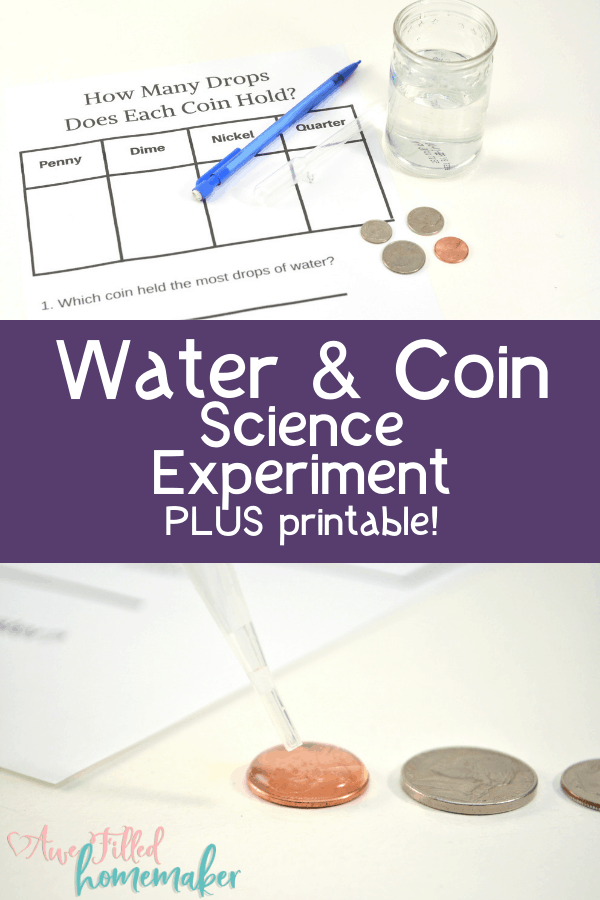
I’m sure you’ve heard me say on here that science experiments aren’t my thing normally! That’s why I have to think of Science experiments like this Water & Coin Science Experiment. Science experiments like this is incredibly easy and uses regular household items.
Have you ever wondered what to do with all the random change just lying around your house? Why not use it to create a pretty awesome Water & Coin Science Experiment? It’s a great way to interact with your child and have fun experimenting together!

The significant part about this Water & Coin Science Experiment is its super quick and simple to do. Literally, all you need to get started is a penny, a nickel, a dime and a quarter, an eye dropper, and a few other minimal items. Most of those items are probably sitting in the next room or on the end table close to you!
More Experiments To Try
Water & Coin Science Experiment
Not only is this experiment easy to do, but it can also be done anywhere. Have some time to waste before heading off somewhere? Give this Water & Coin Science Experiment a go! It’s fast and there is no mess or clean-up after to have to deal with!
Your child will love that they can do this experiment entirely on their own. It will give them such a sense of accomplishment knowing that they completed it from start to finish without any help from you. Let them do the work and you record their findings. Talk about some genuinely great scientist teamwork!

What Causes The Water To Spill Over The Coin?
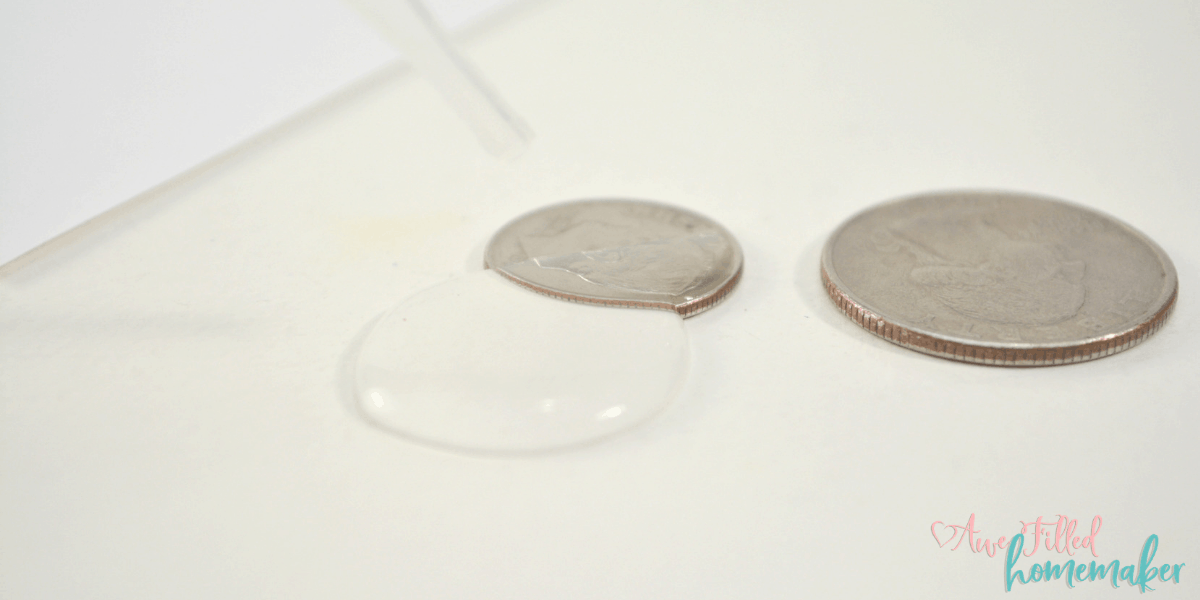
Your child might ask why or what causes the water to spill over your coin. Surface tension is what causes the water drops to form in a dome-like shape on the surface of your coin. With each droplet, more tension is created and produces more force of attraction between the water. Once it reaches the limit, the water will break the surface tension and spill over the coin.
You might be shocked at the number of drops each coin can hold. We do it in 2-4 different sets to pull an average of drops. It is such a neat experiment that get the kids excited to see if the next drop will be what pushes the water over.
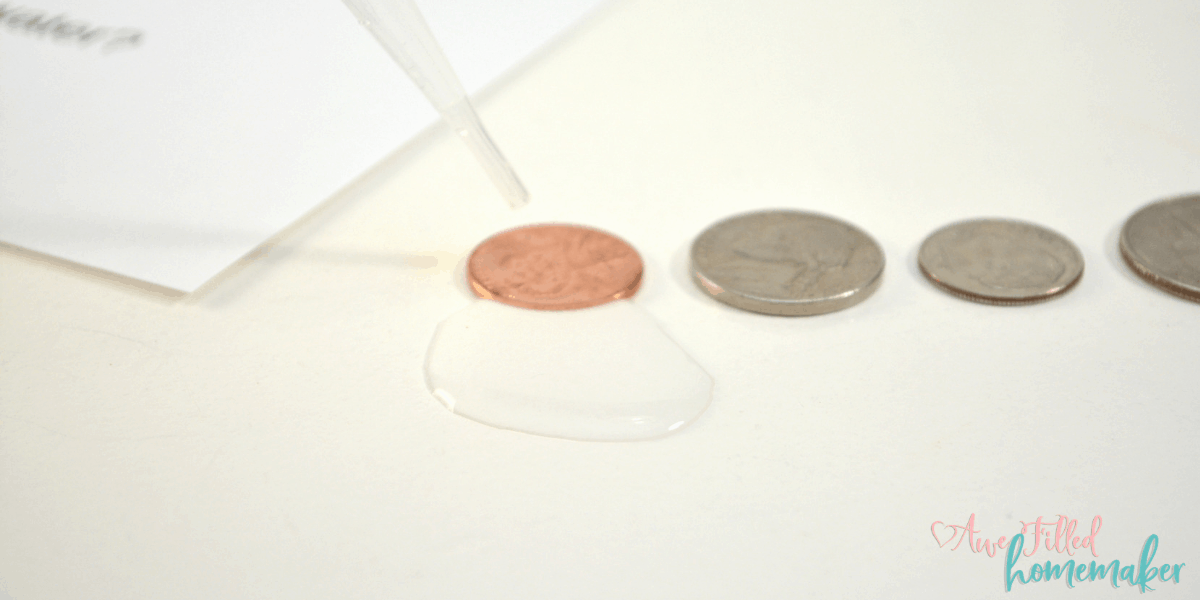
Water Droplet On A Penny Experiment
What is so creative about this experiment is you will vary each time you attempt this science experiment. The reason is the water molecules will be different each time. So one time you might have a few extra drops and the next time you might have more drops. The negative and positive molecules will attract similar to that of a magnet. This makes the water droplets stick and form together holding a tight seal. It will begin to build a stronger tension as a new drop is added. After so many drops, the gravity forces your dome of water to break. The anticipation is exciting for adults and kids alike!
Kitchen Science Lab for Kids: 52 Family Friendly Experiments from Around the House 4M Kitchen Science KitThe Science of Good Cooking: Master 50 Simple Concepts to Enjoy a Lifetime of Success in the Kitchen (Cook’s Illustrated Cookbooks)


How Many Drops of Water Can Each Coin Hold Experiment
Materials You Will Need For Water & Coin Science Experiment:
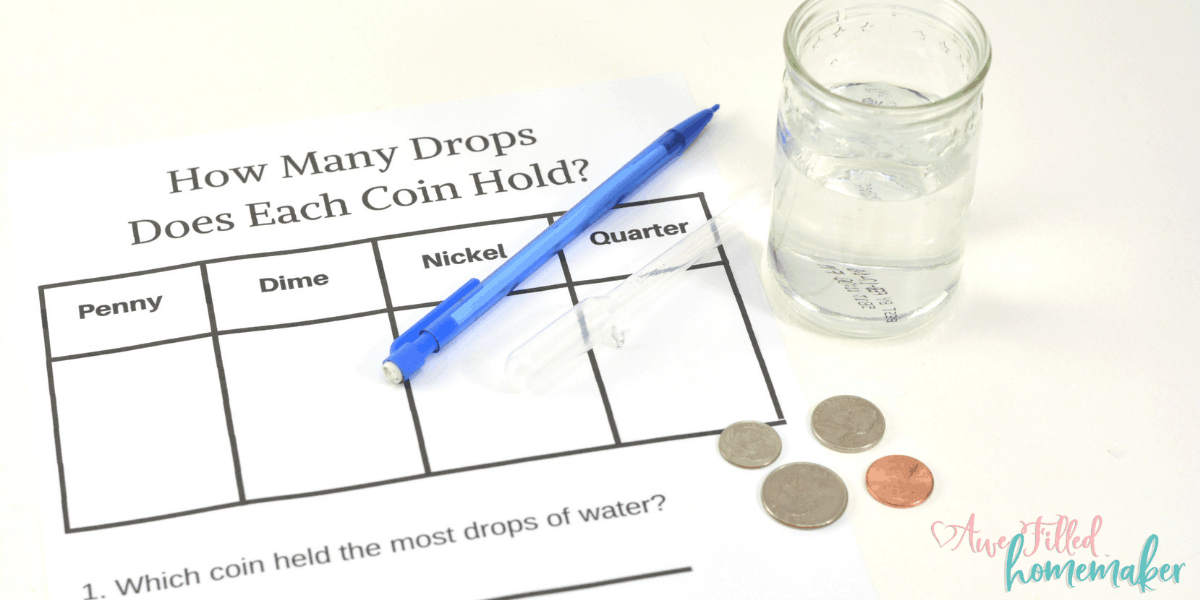
- 1 Penny
- 1 Dime
- 1 Nickel
- 1 Quarter
- A pipette or an eye dropper
- Water
- Pencil
- Printable experiment worksheet
Instructions:
1) Line up the coins in a row.
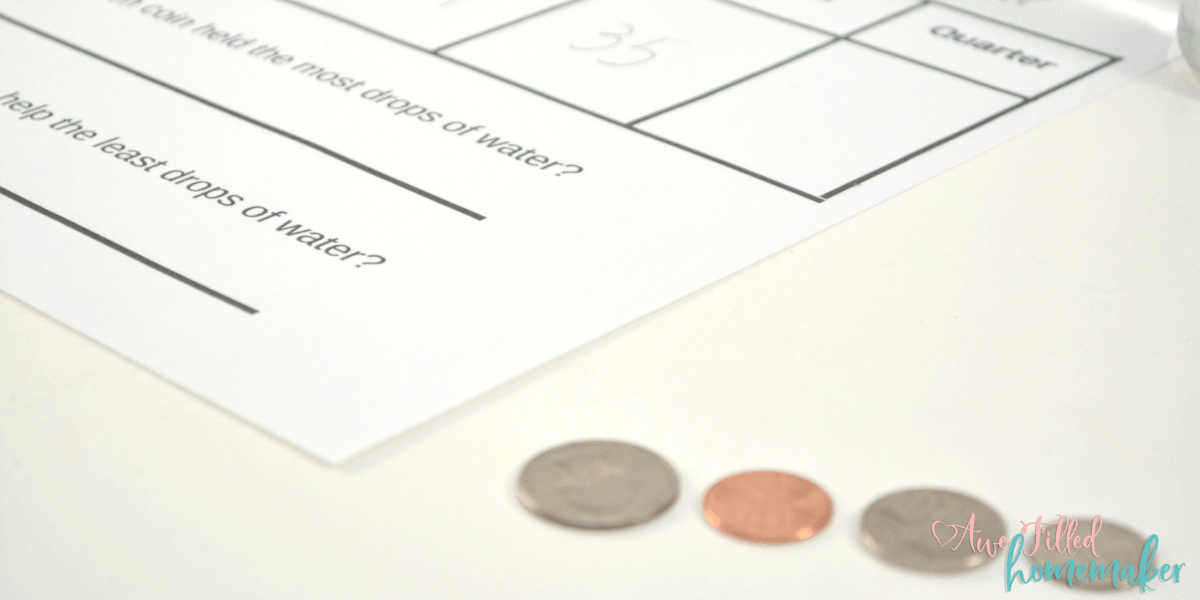
2) Beginning with the smallest denomination, place drops of water on the face of the penny with a pipette or eye dropper.
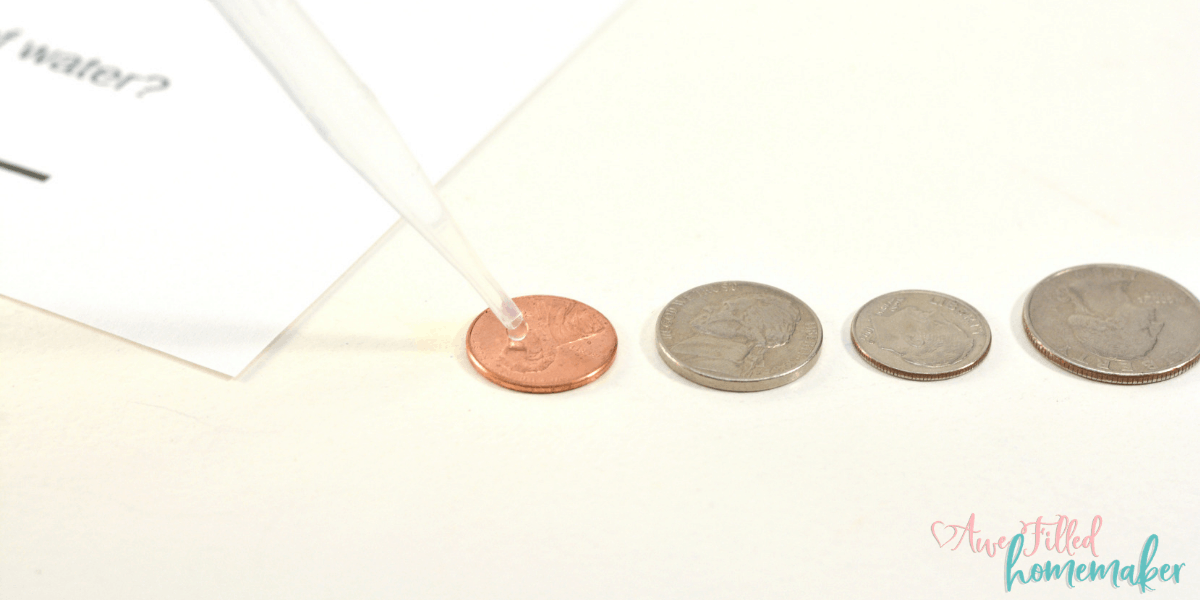
3) Continue to place drops on the penny until the water spills over the top. Count how many drops the penny was able to hold before it overflowed.
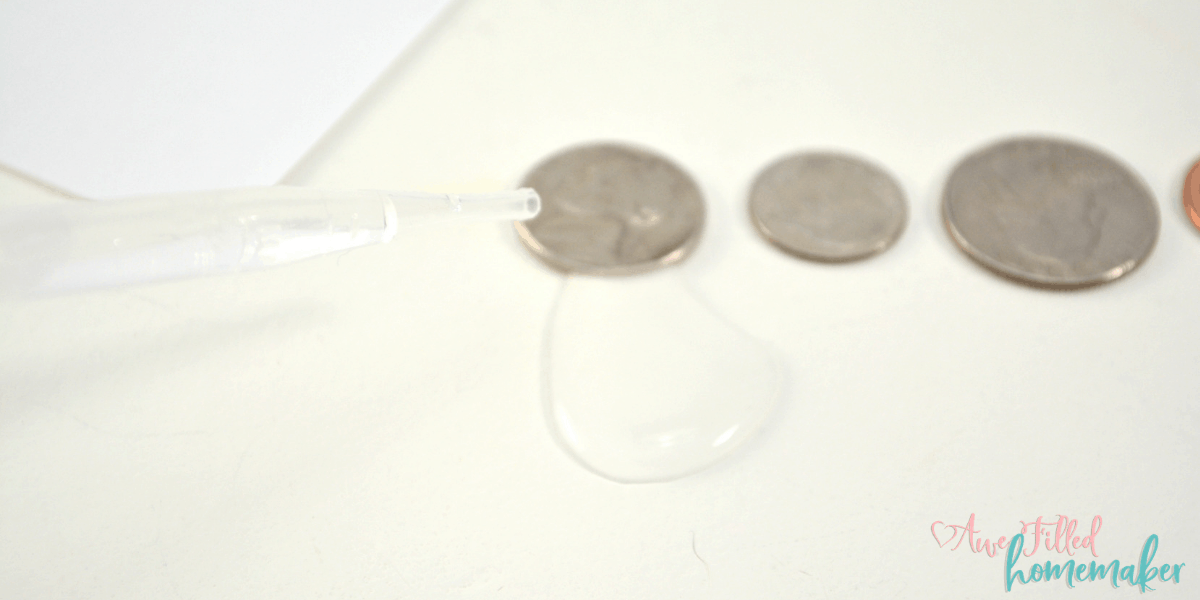
4) Record your findings on the printable experiment worksheet.

5) Repeat steps 2-4 for the remaining coins one at a time.
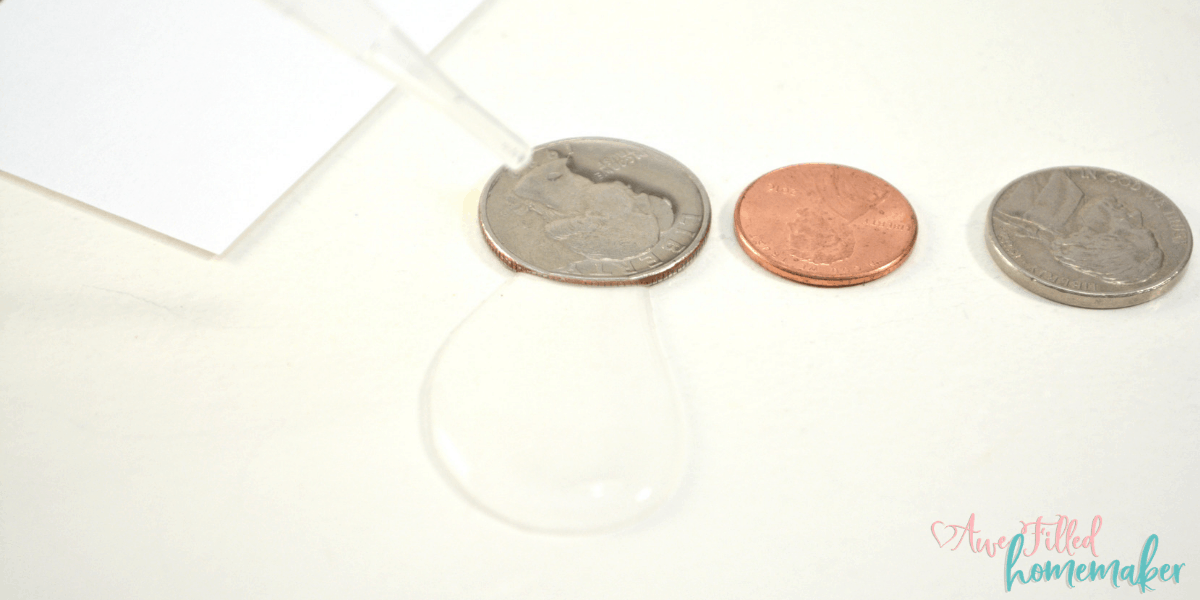
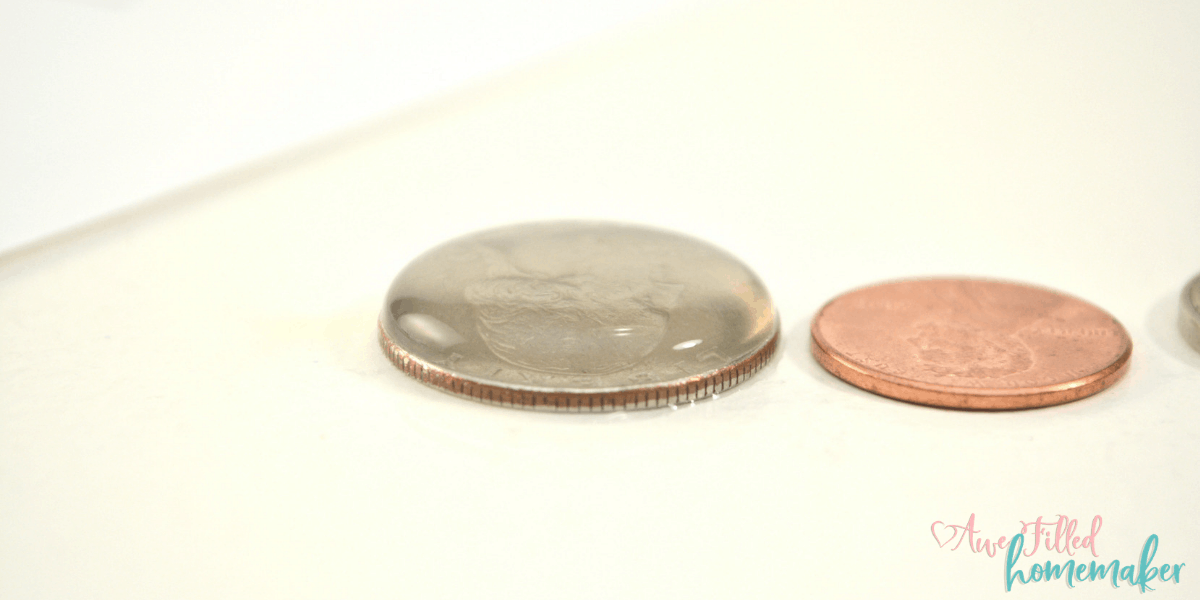
6) Once you have completed the experiment and determined how many drops of water each coin can hold, answer the remaining questions on the printable worksheet.
7) Complete the experiment again to test your findings.
Go Further With Your Experiment
Soap | Add soap into your water and see if you get the same results as the water. Make sure to record all your findings to compare to plain water.
Rubbing Alcohol | Next try rubbing alcohol in place of water. You will find the alcohol won’t hold near as many droplets as it has less surface tension than water. See if your kids can guess which one will hold more drops!
This is the perfect rainy day experiment that you can sit down and do with your kids. Make sure to grab a pen and paper to keep track of how many drops each coin can hold. I think you and your kiddos will have a blast testing out this experiment!
As you can see, this is a very affordable and straightforward way to put your thinking caps on and unplug from the television. Whether you homeschool or happen to be looking for an educational experiment, this might be a perfect fit.
Dive deeper and research surface tension with your kiddos. Who knows? Maybe Mom and Dad might learn something new in the process. I know I sure did!

Don’t forget, you will need your printable. So click below to grab it. Free for subscribers.

Also- Don’t Forget to Print the Directions to the Experiment off to have handy!

Water & Coin Science Experiment
Science experiments like this is incredibly easy and uses regular household items.
Materials
- 1 Penny
- 1 Dime
- 1 Nickel
- 1 Quarter
- A pipette or eye dropper
- Water
- Pencil
- Printable experiment worksheet
Instructions
- Line the coins up in a row.
- Beginning with the smallest denomination, place drops of water on the face of the penny with a pipette or eye dropper.
- Continue to place drops on the penny until the water spills over the top. Count how many drops the penny was able to hold before it overflowed.
- Record your findings on the printable experiment worksheet.
- Repeat steps 2-4 for the remaining coins, the dime, nickel and quarter.
- Once you have completed the experiment and determined how many drops of water each coin can hold, answer the remaining questions on the printable worksheet.
- Complete the experiment again if you wish, to see if your findings were different a second time if you wish.